

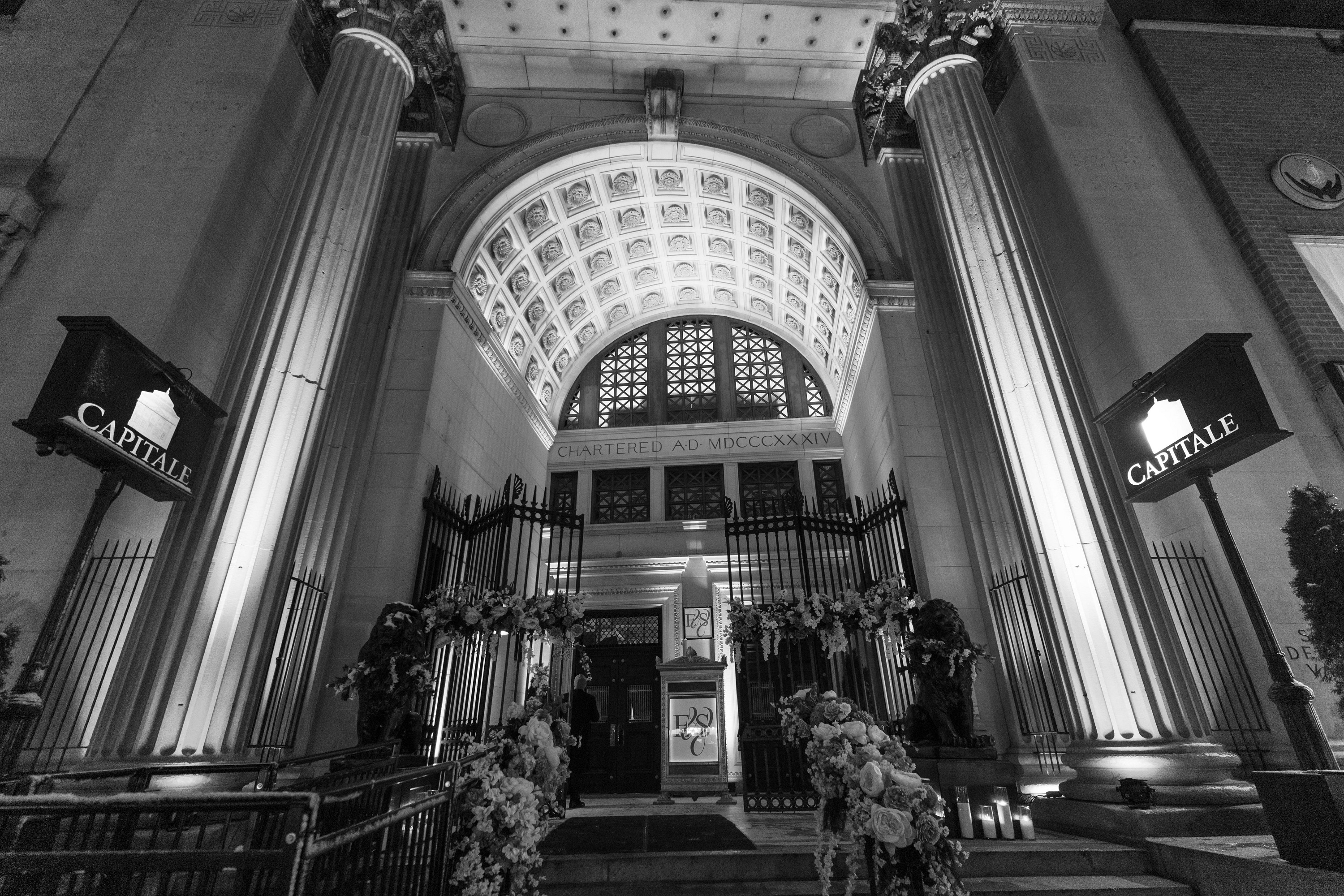
During New York Fashion Week, Capitale offered a lesson in how to give an old New York institution a very contemporary following. More than a thousand guests filled the former Manhattan bank for the largest NYLON Nights party in the magazine’s history. Rachel Zoe and Dixie D’Amelio were among the crowd. Chris Lake closed out the night behind the decks. Beneath the monumental columns, the business of the evening was pleasure.
For Ilya Zavolun, Capitale’s owner, the occasion brought a career in hospitality into sharp focus. His route to the Bowery had taken him through his family’s restaurants and the event venues of Queens. Each offered a different education in what happens when people gather and what it takes to make them come back.
Capitale provides a setting for the next chapter of his career. The former Bowery Savings Bank at 130 Bowery dates to the nineteenth century, with Corinthian columns, marble mosaic floors and ceilings that rise 65 feet. Its architecture was designed to inspire confidence long before it became a backdrop for celebrations. Today, it gives almost any arrival a sense of occasion.
Maintaining that impression over the course of an evening requires a different kind of construction.
Zavolun’s understanding of the work began in his family’s business. Born in Dushanbe, Tajikistan, he grew up with a father, Michael, who built restaurants. When the family later operated a fine dining restaurant in Vienna, Ilya learned hospitality from the positions closest to the guest: in the kitchen, on the dining room floor and at the entrance.
From those vantage points, a restaurant reveals itself as a series of decisions. Someone determines when a table is ready, how quickly a course should follow and whether a guest needs attention or a little space. The room has a rhythm, and everyone working in it contributes.
Vienna gave Zavolun an early appreciation for that discipline. A restaurant’s character emerged through repetition: the welcome extended to each arrival, the consistency of service, the care taken with an ordinary request. An evening that felt effortless to the customer depended on people paying close attention.
“My father taught me to pay attention to how people feel in a room,” says Zavolun. “You can serve a beautiful meal, but guests also remember whether you noticed what they needed. That attention is what brings them back.”
In New York, he operated restaurants in Queens and developed an entertainment restaurant on Manhattan’s 61st Street. With Da Mikele Illagio and Da Mikele Palazzo, his focus expanded to events.
The shift brought a particular set of expectations. A restaurant can become part of someone’s weekly routine. A major celebration may have occupied a family’s imagination for years. The operator is responsible for translating those expectations into something that works in real time, with food, service, music and timing all competing for attention.
Capitale raised the stakes again. Zavolun acquired the property in 2025. By his account, the purchase followed an interest that stretched back nearly eighteen years, to an earlier inquiry about buying the venue that went nowhere. When the building later became available through a sale supervised by the court, he returned to the opportunity.
“Capitale had a remarkable history long before I arrived,” says Zavolun. “Owning it means taking responsibility for what comes next, giving a new generation a reason to walk through those doors and create memories of their own.”
That responsibility extended to the people who already knew the building. One of his priorities, he says, was retaining longtime employees, including people who had worked there for more than two decades. Their familiarity with Capitale offered continuity through the change in ownership: knowledge accumulated across hundreds of events, held by the people who knew the room best.
Capitale also hosts gatherings involving business and international guests. In a city shaped by the global economy, a gathering place can serve a purpose beyond celebration. It can create the conditions for an introduction, a conversation or a relationship that continues long after the evening ends.
That international dimension comes into focus during the United Nations General Assembly in New York, when diplomats and leaders arrive from around the world. The venue's event spaces can accommodate gatherings involving guests from different professional and cultural backgrounds.
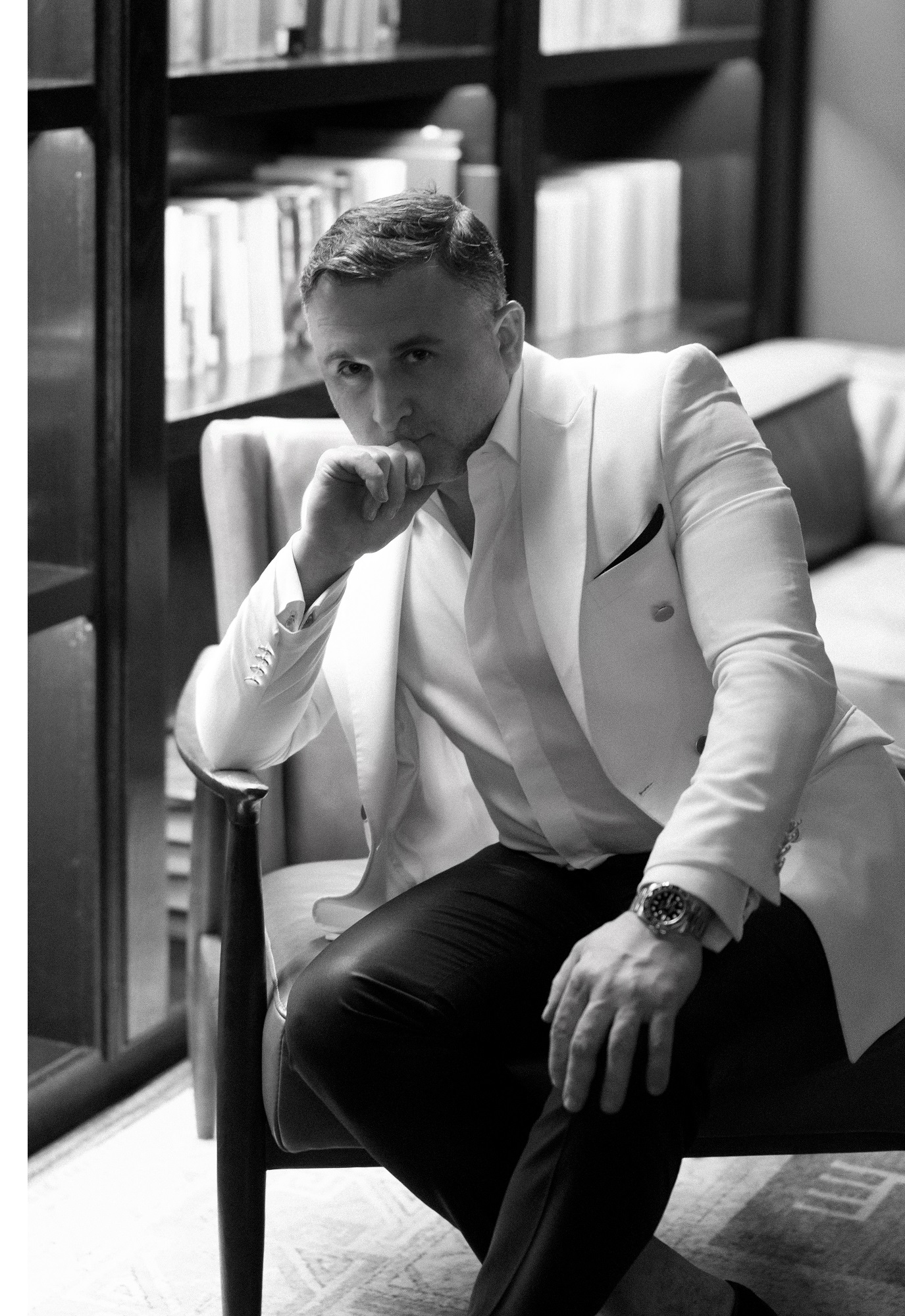 “Welcoming members of the diplomatic community during United Nations General Assembly week carries a particular responsibility,” says Zavolun. “People arrive with different perspectives and a purpose for being there. Our role is to create a setting where they feel welcome, can exchange ideas and have the time and space to build relationships.”
These occasions place different demands on hospitality. Guests bring distinct cultures, expectations and perspectives, while organizers need a setting that supports both formal remarks and personal exchanges. The work depends on understanding the purpose of the gathering as closely as the preferences of the people attending.
For Zavolun, whose journey took him from Central Asia through Vienna to New York, Capitale brings together his experience in hospitality and his interest in hosting guests from different backgrounds.
The Fashion Week party offered an example of the work involved in running the venue. Behind an evening of music, arrivals and photographs lay the less conspicuous business of coordinating people and anticipating problems before guests encountered them.
That work connects Capitale to the restaurants where Zavolun began. The surroundings have grown more imposing, and the guest lists more public. The essential judgment remains personal: knowing when to step in, when to adjust and when to let an evening find its own momentum.
A room like Capitale makes people look up. Zavolun’s business depends on what happens after that first impression: how people are welcomed, how the evening unfolds and whether they leave with a reason to return.