
After three exits producing films for Universal and Netflix, Ali Aksu built Untold to solve a problem that had persisted in Hollywood for decades: audiences support films financially but are never allowed to share in their success.
When Ali Aksu told a room full of crypto enthusiasts in 2021 that compliance would be the foundation of his entertainment tokenization platform, the reaction was immediate. In an industry racing to avoid regulation, he became the black sheep. Three years later, as enforcement actions shutter non-compliant platforms and mainstream finance embraces regulated tokenization, that contrarian bet looks less like caution and more like the only sustainable path forward.
Untold, the first FINRA-registered funding portal for entertainment IP, now stands as proof that opening Hollywood's closed capital system requires both regulatory infrastructure and production expertise. You can't democratize entertainment finance if you don't understand both how films get made and how securities law works. Aksu is one of the few people who understands both.
The Roots
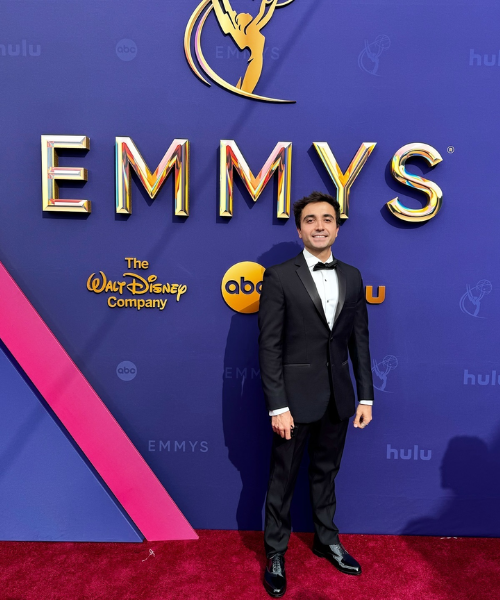
Aksu grew up within the Aksular Group, a Turkish-American conglomerate spanning 80 countries in food manufacturing and distribution. The expected path was succession. Instead, he chose UCLA film school.
"My path into this industry actually started very early and somewhat independently," Aksu explains. "When I was in high school I began working as a production assistant on documentary projects. Being on set and watching how an idea turns into a finished film was fascinating to me."
By his sophomore year at UCLA, he'd produced his first feature, Laid in America, eventually acquired by Universal Studios after a bidding war. The project was one of the early Hollywood films built around YouTube creators, featuring KSI long before influencer-driven entertainment became common.
During that same period, Aksu spent nearly two years working with Scooter Braun Projects. Being around teams managing global artists like Justin Bieber and Ariana Grande gave him insight into how audiences connect with creators and how modern entertainment ecosystems operate.
After graduating, his production work continued. Projects he executive produced for Universal and Netflix premiered at Sundance, received Emmy and BAFTA nominations, landed on Oscar shortlists. Beyond Utopia, currently streaming on Hulu, was Emmy-nominated, BAFTA-nominated, and Oscar-shortlisted.
Then in 2019, his curiosity shifted. Accepted into Singularity University's Global Startup Program in Silicon Valley, Aksu began studying exponential technologies, artificial intelligence, blockchain.
"That experience changed how I looked at the film industry," he says. "Instead of thinking only about producing individual projects, I started thinking about the financial infrastructure behind how films are funded."
The closed system
What Aksu saw was a structural problem that had persisted for decades.
"Hollywood has historically been a closed capital ecosystem," he explains. "A small number of studios, financiers, and private investment groups control most of the funding pipelines. Independent filmmakers often spend years trying to raise money from the same limited group of gatekeepers."
Meanwhile, millions of people globally supported films through ticket purchases and subscriptions but had never been allowed to participate financially in the projects they helped make successful. This wasn't just inefficient. It was a fundamental misalignment.
Audiences wanted to support stories they believed in. Filmmakers needed capital from people who understood their vision. But no infrastructure existed to connect them in a way that was legally compliant, financially transparent, and accessible to retail investors.
"The reason this persisted for so long is that the regulatory infrastructure and digital systems did not exist to open that market responsibly to retail investors," Aksu explains. "Once equity crowdfunding regulation matured and blockchain infrastructure improved, it became possible to rethink how capital flows into entertainment."
Untold was designed to bridge that gap.
The contrarian bet on compliance
When Aksu began building Untold in 2020, most crypto platforms were architecting systems to avoid securities law. The dominant strategy was regulatory arbitrage: design around regulation or operate in jurisdictions with minimal oversight.
Aksu pursued the opposite approach.
"When we began building Untold, much of the crypto industry was focused on avoiding regulation or operating in legal gray areas," Aksu says. "We took the opposite approach. Compliance was not an obstacle for us. It was the foundation."
At crypto conferences where he mentioned compliance, "I became the black sheep in the room."
The bet was contrarian but logical. If the goal was to open entertainment finance to retail investors, those investors needed legal protection. If the goal was to build sustainable infrastructure, that infrastructure needed to survive regulatory scrutiny.
Untold became the first and only FINRA-registered funding portal focused on tokenizing intellectual property securities in Hollywood.
Three years later, the regulatory landscape validates that early decision. Aggressive enforcement has shuttered many non-compliant platforms. Meanwhile, mainstream finance is embracing regulated tokenization. BlackRock CEO Larry Fink has publicly endorsed tokenization as a major direction for capital markets.
"By building this system within a regulated securities framework, we created something that is both scalable and trustworthy," Aksu says.
Where production expertise matters
But regulatory compliance alone doesn't solve the problem. You also need to understand where risk actually lives in film production. This is where Aksu's decade in Hollywood became essential.
"Producing films teaches you something that spreadsheets never can: where risk actually lives," Aksu explains. "A fintech founder might understand financial structures, but film projects involve human variables that rarely show up in models. You are evaluating producers, directors, creative teams, timing, cultural relevance, and distribution pathways."
The questions that determine whether a project succeeds rarely appear in pitch decks. Who is responsible for delivering the film? Is the director capable of finishing production on time and on budget? Is there a credible path to distribution? Does the audience for the project actually exist?
"Those elements rarely appear clearly in pitch decks, but they often determine the outcome," Aksu says. "Having produced films that were acquired by major studios and platforms, I approach project vetting through that lens. Untold is not simply evaluating financial projections. We are evaluating the entire ecosystem around a creative asset."
This dual expertise creates trust with both sides of the platform. Filmmakers trust him because he's produced films and understands their challenges. Investors trust him because he's built compliant infrastructure and knows which projects are credible.
Pure fintech founders can build blockchain protocols. Experienced producers can vet film projects. Very few people can do both.
Proof of concept
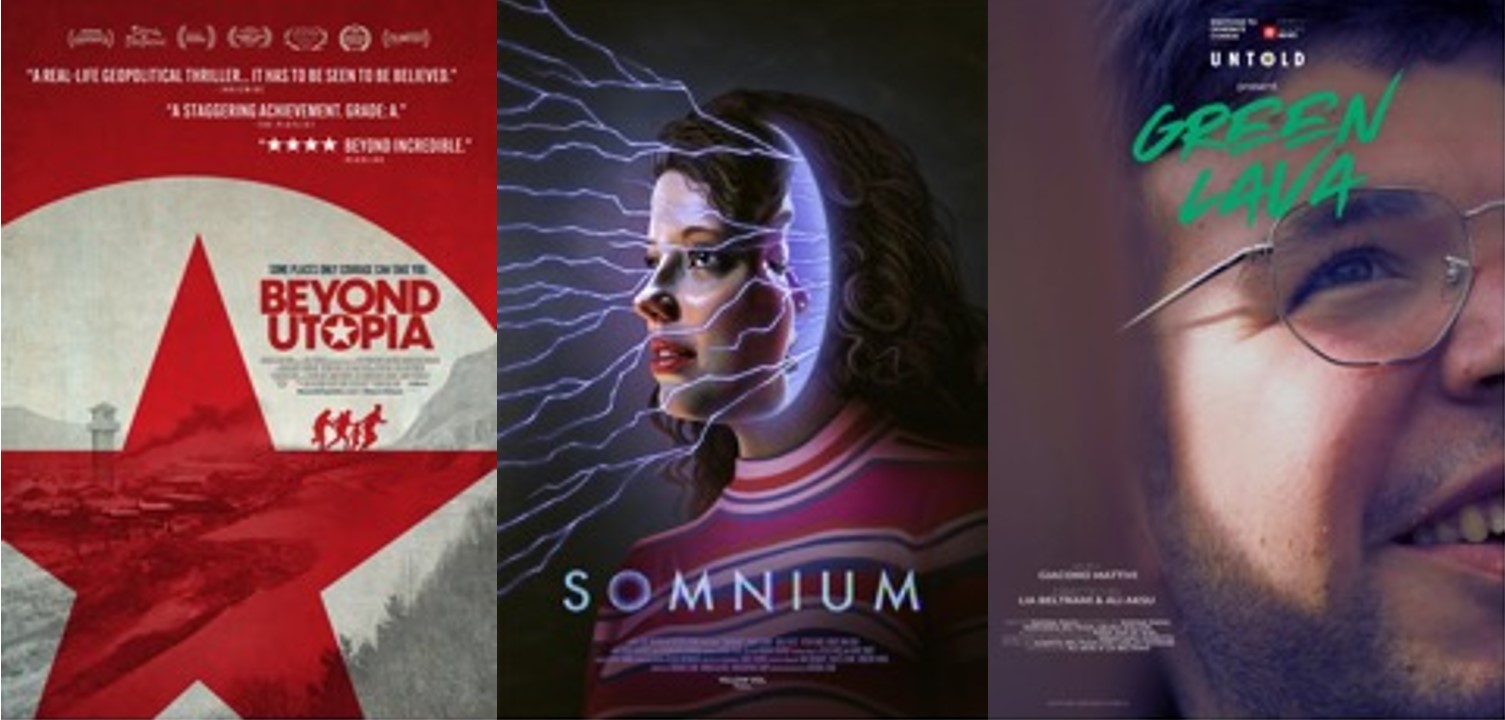
The outcomes across projects connected to Untold's ecosystem demonstrate the model works.
Beyond Utopia received Emmy and BAFTA nominations and was Oscar-shortlisted after premiering at Sundance. It's currently streaming on Hulu, reaching global audiences while earning recognition from prestigious institutions. Somnium secured theatrical distribution across the United States and received awards at international festivals. Other productions sold at global film markets like Cannes.
Perhaps most significantly, Untold enabled retail investors to participate in a production starring Robert De Niro and Morgan Freeman. For the first time in Hollywood history, anyone with a credit card could invest in a De Niro film. "Taken together, these results show something important: opening access to entertainment finance does not mean lowering the quality threshold," Aksu says. "It simply means expanding who can participate."
The platform operates as both an impact investing marketplace for filmmakers raising up to $5 million via regulation crowdfunding (provided their projects are impact-driven) and a white label solution for any creator raising capital through the same compliant infrastructure.
Deal structures vary based on producer preference. Some are equity deals, others are structured against tax incentives or as debt arrangements. This flexibility within a compliant framework allows producers to structure offerings matching their project's financial architecture while maintaining regulatory integrity.
But Untold's model extends beyond pure capital formation. It operates as a hybrid: equity crowdfunding, debt crowdfunding, collectibles, and tokenized ownership. Investors receive securities tied to revenue shares plus collectibles based on investment amounts. Royalties flow directly to investor wallets through custom ERC protocol smart contracts. Untold's revenue comes from transaction costs and backend equity in projects. But the value proposition for filmmakers extends beyond capital access. The platform incubates projects, helps secure production incentives, assists with cast and crew assembly, and provides sales support through distribution networks.
It's end-to-end infrastructure that pure fintech platforms cannot offer.
The education of a founder
Aksu's career reads like someone deliberately assembling the exact credentials needed to build Untold, though he insists the journey was organic.
After Singularity University, he completed executive programs in blockchain technologies at MIT and data analytics at Wharton. He's currently pursuing an Executive MBA at the University of Chicago Booth School of Business.
"My career has developed at an intersection that does not usually exist in one place," he reflects. "On one side I have spent over a decade working in film production, distribution, and development. On the other side I have focused heavily on emerging financial and technological systems. Untold sits exactly at the intersection of those worlds: storytelling, capital markets, and emerging technology."
The founding team reflects this same intersection. Phil Goldfine, an Oscar, Tony, and Emmy-winning producer with over 180 feature film credits, all successfully sold. Michael Terpin, known in crypto as the "Godfather," with experience launching 20+ ICOs and four successful startup exits. Laszlo Mari, the CTO, a blockchain specialist who has consulted for Binance, Solana, and Polygon.
It's domain expertise that shapes which projects Untold accepts and how they're structured for investors.
The communication challenge
Building sophisticated infrastructure for retail audiences created an unexpected challenge: how do you explain backend differentiation when users never see the backend?
Untold's competitive advantages live in invisible places. SEC registration. Background checks on major stakeholders. Issuer vetting processes. Tokenized royalty streams through custom smart contracts.
Early on, Aksu made the mistake most technical founders make: he explained the sophistication. "We leaned too heavily into technical terminology," Aksu admits. "Words like tokenization, blockchain architecture, and decentralized finance created confusion rather than clarity."
The breakthrough came when he stopped explaining what Untold was and started explaining what it allowed people to do.
"We began describing Untold as a platform that allows audiences to invest in the stories they believe in," Aksu says.
"That idea resonates immediately because people already understand storytelling. When the financial structure is explained through that lens, the concept becomes intuitive."
"The lesson was simple: people do not invest in technology frameworks. They invest in stories and opportunities."
"Infrastructure builds trust, but most users never see it directly," Aksu explains. "Our challenge is to make the important parts visible without overwhelming people with technical detail. The goal is clarity without complexity."
The bigger picture
Untold exists within a broader shift in how audiences relate to creators.
"The creator economy is growing rapidly because audiences increasingly want a direct relationship with creators," Aksu says. "But capital markets have not evolved at the same pace. Untold is attempting to modernize the financial infrastructure behind creative industries by allowing audiences to invest in intellectual property."
Goldman Sachs projects the creator economy will reach $480 billion by 2027. But most creator monetization still flows through advertising, subscriptions, or platform revenue shares rather than direct investment in creative output.
Each year, Untold hosts the Davos Film Festival during the World Economic Forum, bringing together filmmakers, investors, and leaders interested in impact storytelling. This year the platform hosted Virgin Unite CEO Jean Oelwang for a conversation about how storytelling can influence global change.
The vision extends beyond film. Music royalties, streaming content, other creator-driven intellectual property represent natural adjacencies.
"We see the platform expanding across multiple forms of intellectual property," Aksu says. "Film remains a core focus, but music, streaming content, and other creator-driven assets are natural extensions."
Entertainment intellectual property behaves differently from traditional venture investments. Technology startups often require seven to ten years to reach liquidity events. Film projects move on a much faster timeline, with production, release, and distribution usually occurring within a few years.
"For investors that creates a different risk and return profile compared with venture capital," Aksu explains.
As tokenization becomes more widely adopted across financial markets, the opportunity to apply it to creative industries expands.
"The challenge will remain the same," Aksu notes. "Keeping the system sophisticated on the backend while making it intuitive for everyday investors."
The alignment thesis
At its core, Untold is built on what Aksu calls alignment.
"For decades audiences have supported creative industries culturally and financially, but they were never allowed to participate in the economic upside of the stories they helped make successful," he explains. "Tokenization makes it possible to rethink that relationship. When intellectual property becomes a transparent, investable asset class, creators gain new funding pathways while audiences gain access to opportunities that were historically limited to private finance networks."
"My career has taken me through several corners of the entertainment ecosystem, from producing films and working alongside artists to studying the technological systems shaping modern capital markets," Aksu reflects. "The goal with Untold is to bring those worlds together and build the infrastructure that allows storytelling and capital to interact in a more open and efficient way."
That vision required choosing compliance over shortcuts, building production credibility alongside regulatory infrastructure, and solving the translation problem of making complex systems understandable.
For a founder who started as the black sheep in crypto conference rooms, the bet seems to be working. Untold has proven that you can democratize entertainment finance without lowering quality standards. That compliance creates trust rather than friction. And that the intersection of Hollywood production experience and securities regulation, however rare, is exactly what's needed to open a closed system.
The hard work wasn't just building the technology. It was building infrastructure that serves both creators who need capital and audiences who want to support stories they believe in.
Three years in, that infrastructure exists. And it's just getting started.